
Laundry & Home Care
Carpet and Mattress Cleaning in Gurugram: How Often and Why
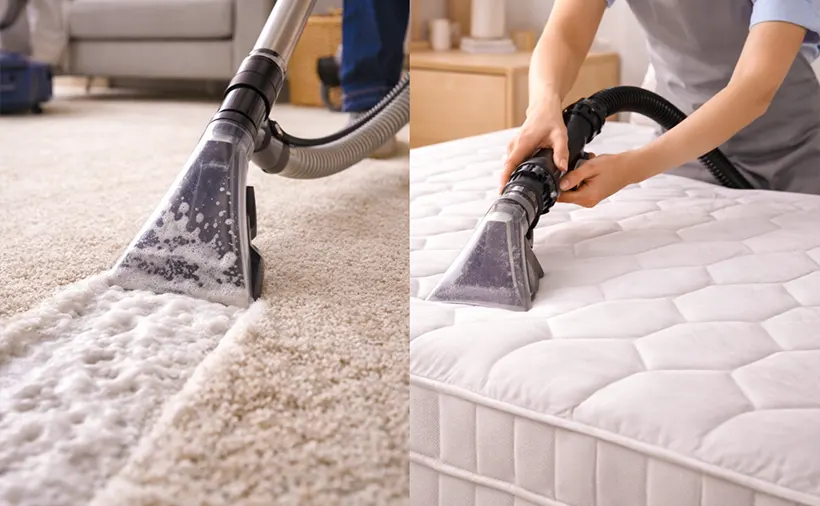
Carpets and mattresses get used every day and cleaned almost never. Here is how often each needs a deep clean, what you can do at home, and where to stop...
A white shirt is the one garment that shows everything. White shirt yellowing does not arrive overnight: the collar greys first, then the cuffs, then a faint cream tint spreads across the whole shirt until it no longer matches the new one next to it in your wardrobe. The good news is that almost all of this is preventable, and most of it comes down to what you do in the first few hours after wearing the shirt, not to how strong a whitener you buy.
Three things turn a white shirt yellow, and none of them is dirt in the usual sense.
Heat locks all three in. A hot wash or a hot dryer on an untreated collar bakes the oil into the cotton, and that is the point at which yellowing stops being a laundry problem and becomes close to permanent.
Order matters more than products here.
Tip: Let deodorant and sunscreen dry fully before you put the shirt on. Most underarm yellowing starts as wet product pressed straight into cotton.
Collars and cuffs sit against skin all day and take the most friction, so they collect oil faster than the rest of the shirt and lose it more slowly. Treat them as separate small jobs rather than trusting the wash cycle to reach them.
Work the detergent in along the fold of the collar, where the grime actually sits, and along the top edge of the cuff. Use a soft brush or an old toothbrush, in short strokes, with the fabric flat and supported. Never scrub hard on a dry collar: dry friction fuzzes the cotton surface, and a fuzzed collar looks grey even when it is clean.
For a collar that has already gone yellow, soak the shirt in warm water with an oxygen-based whitener before washing. Give it time rather than strength, and repeat the soak once more if the mark has faded but not gone. Two gentle rounds beat one aggressive one on every fabric.
| Shirt | Best route | Why |
|---|---|---|
| Everyday cotton shirt | Wash and fold | Water and detergent clean cotton best; priced by weight |
| Shirt you wear to meetings | Premium laundry | Handled individually and pressed, so collars stay crisp |
| Formal or lined shirt, tuxedo shirt | Dry cleaning | Structure, interlining and pleats do not take drum agitation |
| White silk or satin shirt | Dry cleaning | Water swells the fibre and dulls the sheen |
| White shirt with set-in yellowing | Hand it over, flag the spot | Needs targeted spotting before any general wash |
If you are not sure which pile a shirt belongs in, our guide on wash and fold vs dry cleaning walks through the whole wardrobe item by item.
Send a white shirt out rather than fighting it at home when the yellowing has survived two washes, when the underarms have gone stiff, when the shirt is tailored or lined, or when the label says dry clean only. Home washing has no way to spot-treat one area at a controlled strength, and repeated full-shirt soaks wear out the whole garment to rescue two inches of collar.
At Dhulai every garment is inspected before cleaning and the method is chosen for the fabric and the stain, which is exactly what a yellowed collar needs: the treatment aimed at the collar, not at the shirt. Everyday whites can go as wash and fold at ₹69 per kg, shirts you want individually handled and pressed as premium laundry at ₹175 per kg, and formal or lined shirts as dry cleaning from ₹129 per piece. The full list is on our prices page.
Point out the yellowed spots when you hand the shirts over or when you book a pickup. A collar that has been flagged gets pre-treated before it joins a load, and that is usually the difference between a shirt that comes back white and one that comes back slightly better than it was.
Dhulai has five stores in Gurugram, in Sector 43, 47, 52, 60 and 69, open Monday to Sunday from 9 AM to 8 PM, with free pickup and delivery across those sectors and nearby areas.
Yellowing is usually body oil, sweat residue and deodorant left behind in the fibre after a gentle wash. The marks are invisible when fresh, then oxidise and darken over weeks in the wardrobe, which is why a shirt can come out of storage yellower than it went in.
Not for long. Chlorine bleach strips colour but also weakens cotton and reacts with protein stains and some finishes, which can leave a permanent yellow cast on collars and underarms. An oxygen-based whitener and a proper pre-treatment are safer and work better over the life of the shirt.
Recent yellowing usually responds to pre-treating the collar and cuffs and washing in warm water. Old, set-in yellowing that has been through a hot dryer or bleach is much harder to shift, so treat the stain the week it appears rather than at the end of the season.
Everyday white shirts can go as wash and fold at ₹69 per kg, or premium laundry at ₹175 per kg when you want them individually handled and pressed. Formal and lined shirts can be dry cleaned from ₹129 per piece. Pickup and delivery are free across Sector 43, 47, 52, 60, 69 and nearby areas of Gurugram.
Carpets and mattresses get used every day and cleaned almost never. Here is how often each needs a deep clean, what you can do at home, and where to stop...
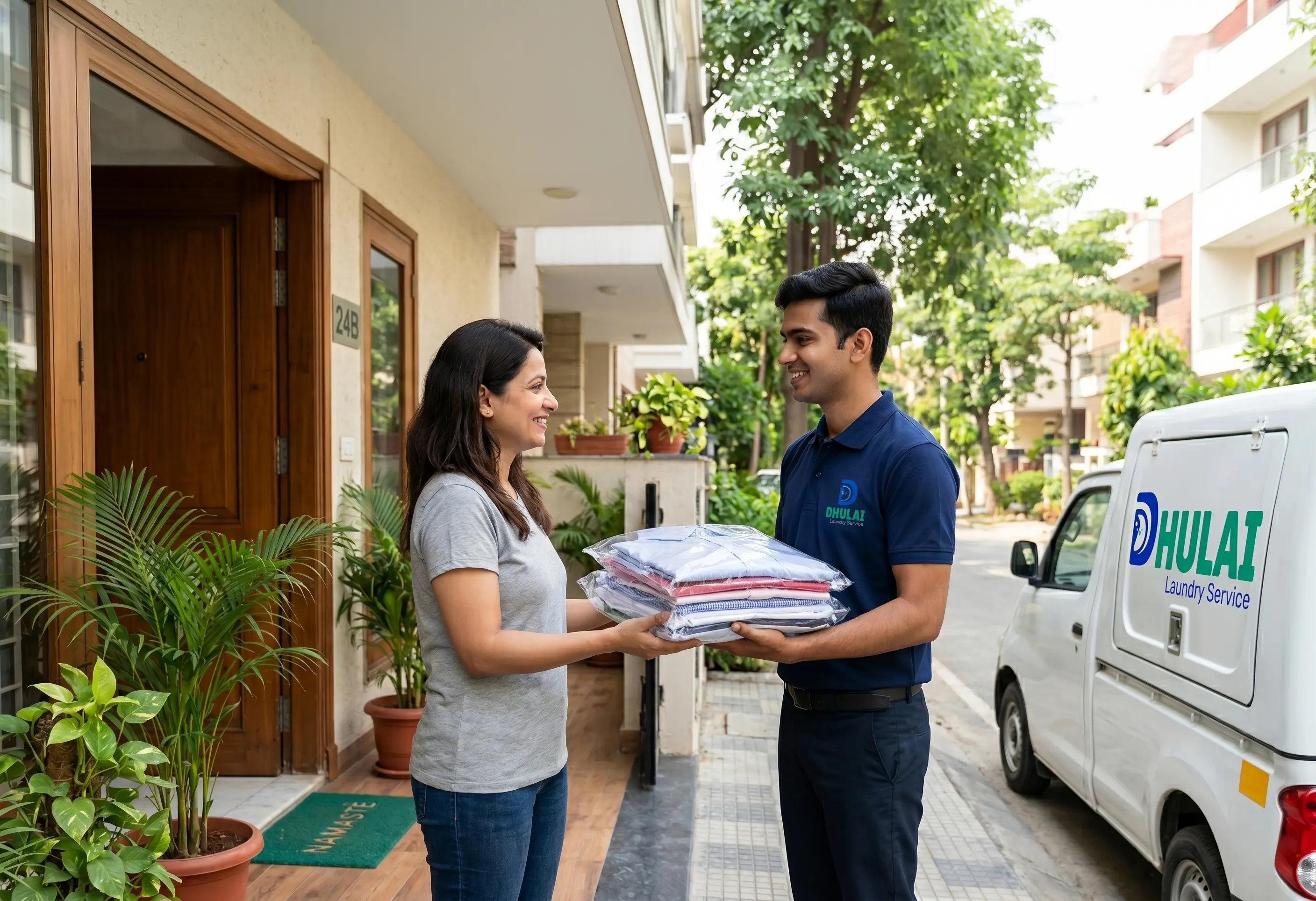
Laundry pickup and delivery in Gurugram, explained end to end: the sectors we collect from, how a doorstep order works, what you can send and what it costs...

Both services are good; they are built for different clothes. Here is exactly which pile each garment belongs in, so you never pay per piece for t-shirts again...